
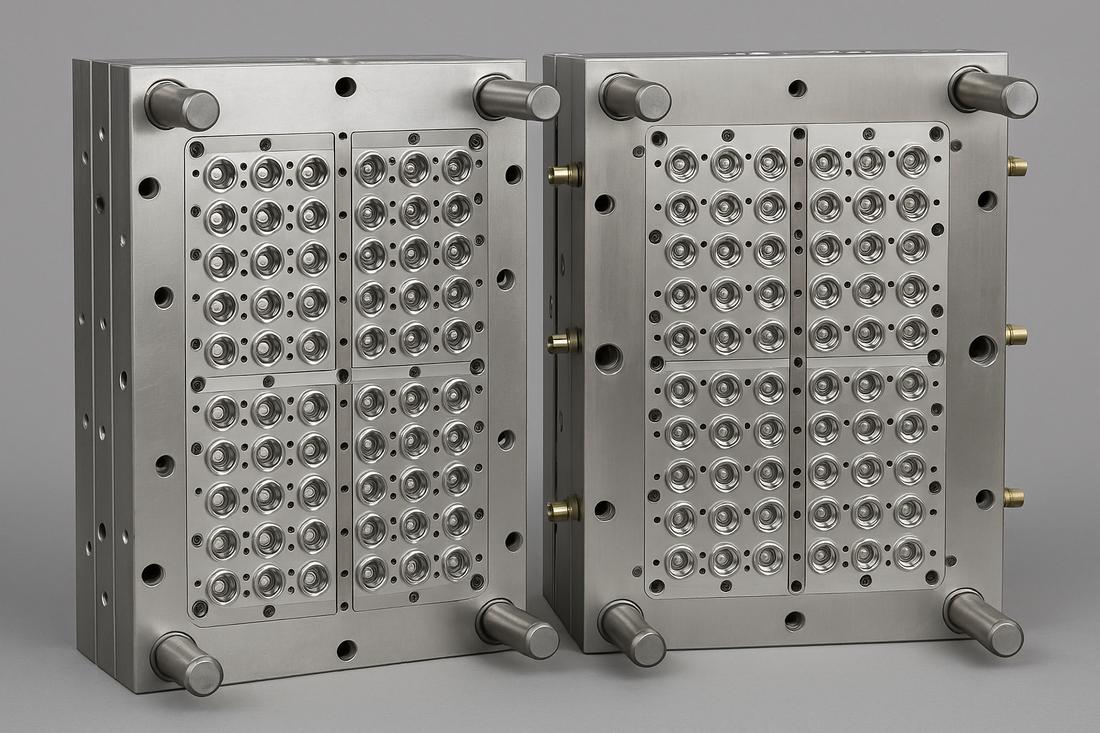
Family and Multi-Cavity Molding Design Guide
Compare cavity layout, filling balance, and part compatibility before selecting a family or multi-cavity tool.
Get the Guide With Your QuoteBoValley supports family and multi-cavity injection molding projects designed around part geometry, production volume, and quality requirements. These tooling approaches can help increase output per molding cycle or produce related components within a coordinated mold design.
Overview
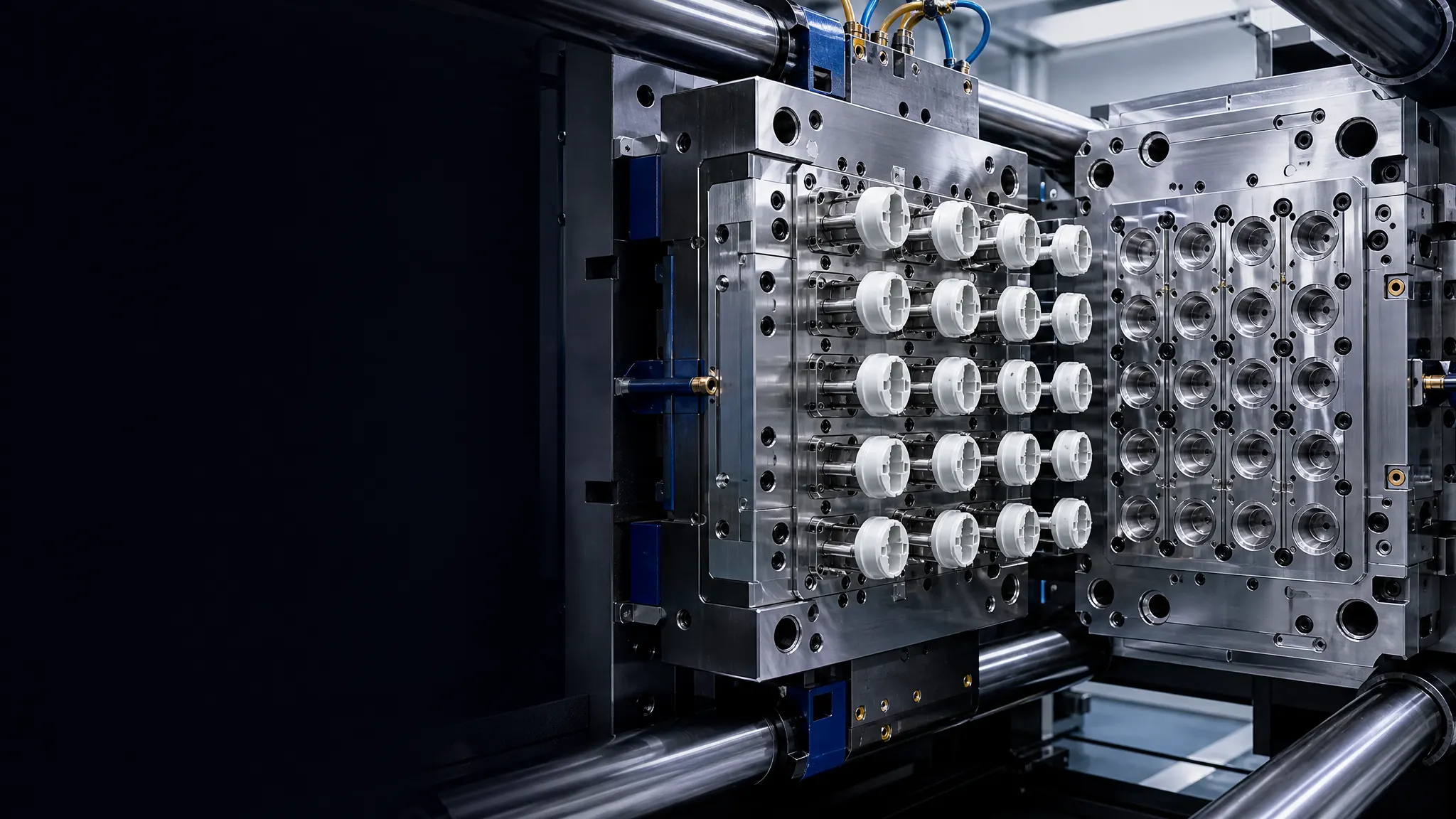
Multi-cavity molding uses multiple cavities in one mold to produce several copies of the same part in a single molding cycle. It is commonly considered when production demand justifies a higher-output tooling design.
Family molding uses one mold to produce two or more different but related parts in the same cycle. It can be useful for product assemblies whose components share a material and can be balanced within a common tool design.
Both approaches require careful evaluation of part geometry, cavity layout, filling balance, cooling, shrinkage, ejection, and quality control. Family molds are not suitable for every combination of parts, especially when components require substantially different materials or process conditions.
Compare cavity layout, filling balance, and part compatibility before selecting a family or multi-cavity tool.
Get the Guide With Your QuoteCompare cavity layouts, resin compatibility, and tooling requirements against the design and expected volume.
 Materials
Material selection should follow the product's mechanical, thermal, chemical, appearance, and regulatory requirements. A family mold typically requires compatible molding conditions across the parts produced in the same cycle.
Standard finish options available for all cavities in a multi-cavity or family tool. Finishes are applied uniformly so every part in the shot matches.
| Parameter | Key Considerations |
|---|---|
| Tooling Type | Multi-cavity mold or family mold |
| Cavity Configuration | Same-part cavities or different related parts |
| Materials | Commonly compatible thermoplastics selected for the part design |
| Part Compatibility | Material, wall thickness, shrinkage, filling, and cooling requirements |
| Mold Layout | Gate locations, runner balance, venting, cooling, and ejection |
| Production Volume | Evaluated against tool cost, cycle time, and demand |
| Quality Planning | Critical dimensions, cavity identification, sampling, and inspection method |
| Tooling Validation | Trial runs and part approval based on agreed requirements |
The Process
A multi-cavity mold produces copies of one part in a cycle. A family mold produces related parts with different geometries. Both need a balanced layout, suitable cooling, and trial parts for review.
 Quality
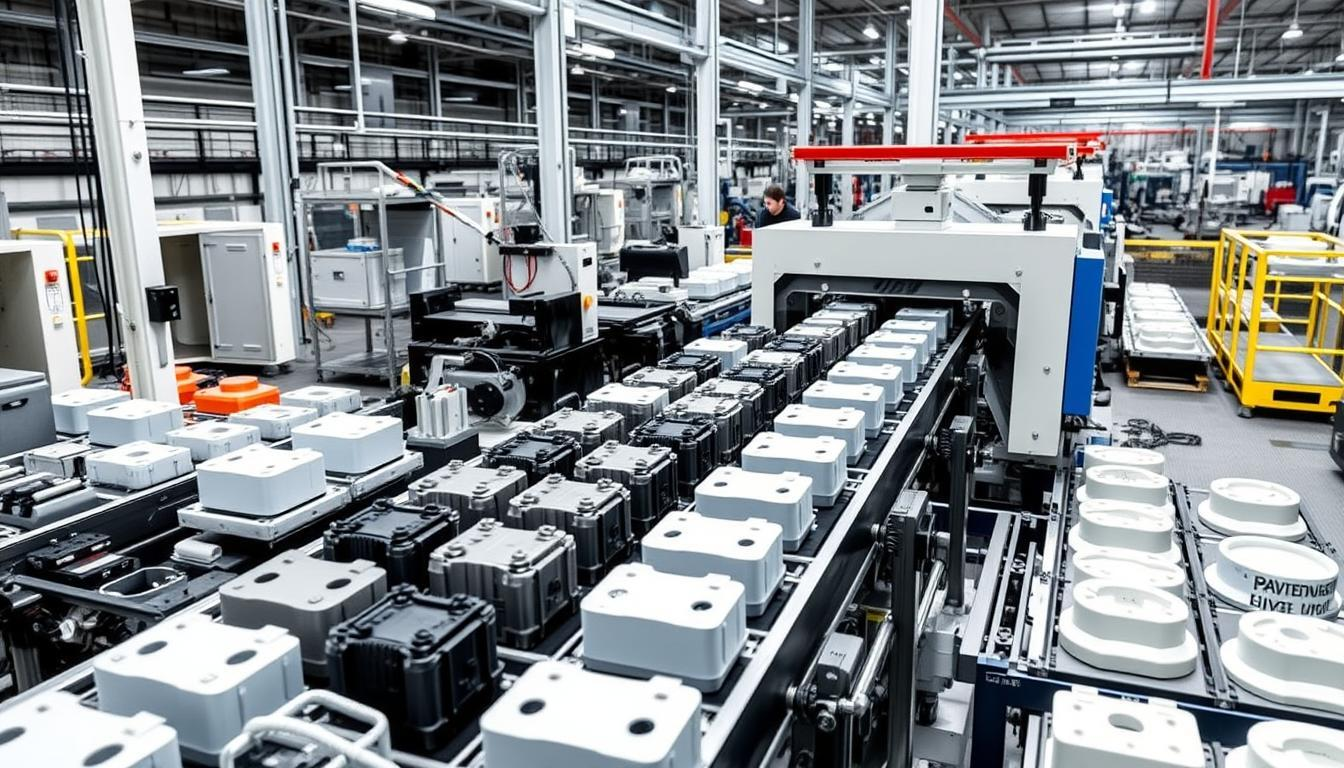
These tooling approaches are useful when the expected demand, part design, and molding conditions support producing multiple components in each cycle.
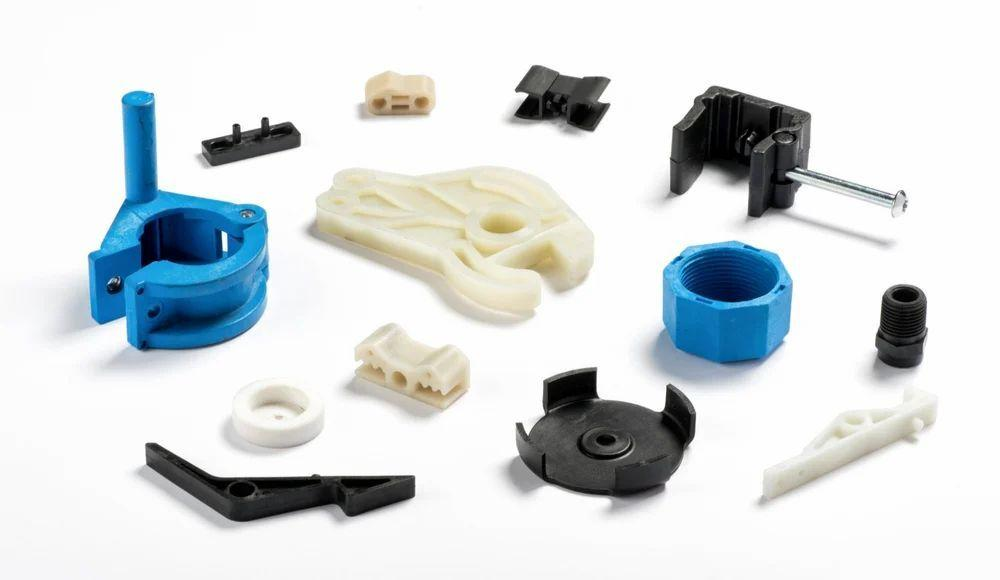
housings, covers, and internal components
clips, brackets, and interior components
connectors selected insulating components
knobs covers, and functional parts
small components
plastic product assemblies
| Types of Parts | Function |
|---|---|
| Matched covers | Mold related pieces for the same assembly where material and flow are compatible. |
| Repeat clips | Use repeated cavities for the same approved part when volume supports it. |
| Housing sets | Evaluate cavity balance and dimensional consistency across related parts. |
Upload your CAD file today — get a detailed quote with DFM feedback within 24 hours.